

chosen, papers were filed, and the business was supposed to start soon. Then, funding got delayed. The project was pushed back.
Months passed, but the company stayed on record, along with compliance pressure. This is where dormant status under Section 455 becomes useful. It lets a company stay legally alive without running active business operations.
For startups, future projects, or asset-holding entities, this offers a practical way to pause without shutting the business down.
Expert Insight: Section 455 is a useful method if you want to keep future plans or assets safe without running the business right now. But it shouldn’t be left like that for too long. If a company stays dormant for around five years, there’s a risk it could be removed from the registrar.
What is Dormant Status Under Section 455 of the Companies Act, 2013?
Under Section 455 of the Companies Act, 2013, a company can stay legally registered even when it is not actively doing business, as long as basic compliance is still being followed.
In simple words, the company exists, but it is not actively doing business. There are no regular sales, purchases, or income being generated.
As per the Ministry of Corporate Affairs (MCA), this status is meant for companies that are inactive but still legally registered.
The company still exists and can:
- Hold assets like property or IP
- Keep its registered name
- Stay on official records
Eligibility Criteria for Dormant Status Under Section 455
To qualify for Section 455 Companies Act benefits, these basic conditions should be met:
- No active business operations should be going on
- No significant accounting transactions should be taking place
- Only basic payments, such as government fees or compliance-related expenses, are usually allowed
Before applying, a few things should also be checked:
- Taxes and pending filings should be cleared
- Major statutory dues should not be pending
- Lender consent may be needed if the company has outstanding loans
Not sure if your company qualifies for dormant status?
What Is The Procedure to Obtain Dormant Status?
Getting dormant status is not as complicated as it sounds. If the paperwork is in order, the process is fairly straightforward.
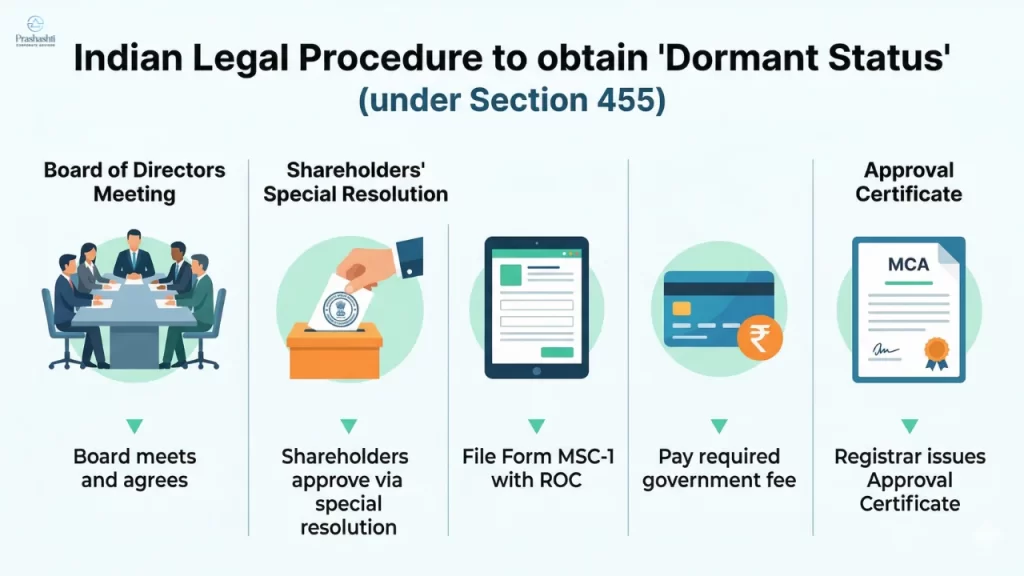
It usually moves like this:
- The board first meets and agrees to apply for dormant status
- shareholders then approve the decision through a special resolution
- Form MSC-1 is filed with the Registrar of Companies
- The required government fee is paid along with the form
After that, the Registrar checks the application and supporting documents. If nothing is missing and the company meets the conditions, approval is given. A certificate is then issued, and the company is officially treated as dormant. In most cases, the process gets completed within a few weeks.
Key Benefits and Advantages of Dormant Company Registration Under Section 455
Reduced Compliance Burden
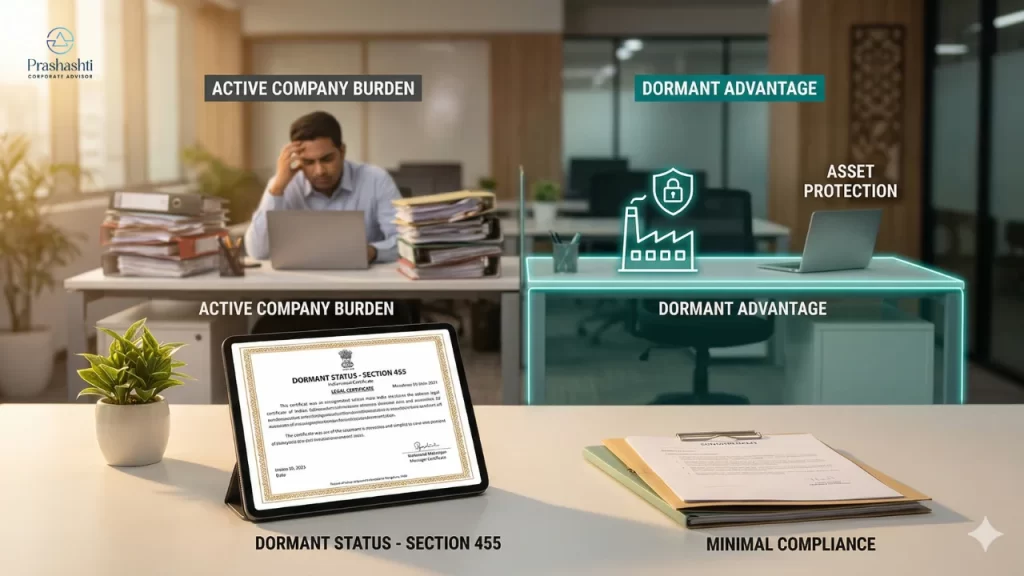
One of the biggest benefits of a dormant company is that the compliance load becomes easy. An active company has to deal with regular filings, audits, and ongoing reporting. A dormant company does not carry the same pressure.
Cost Savings
One of the key Section 455 Companies Act benefits is that it helps in cost savings. You aren’t spending on full compliance if there isn’t any real business going on. This can help businesses that are just starting out or have stopped for a while to save money till they start up again.
Asset Protection
A dormant company can hold assets such as property, investments, trademarks, or intellectual property. This is useful when the company is meant to hold value for the long term, even if the business is not being carried on right now.
Business Continuity
Dormant status helps the company stay ready for the future.
- The company name stays protected
- Reactivation is easier when business plans restart
This means the structure remains in place, so you do not have to begin from zero again.
Lower Risk of Penalties
If the basic rules are followed, dormant status helps the company stay compliant. That reduces the chance of penalties that often arise when an inactive company is left without proper compliance.
Documents Required for Dormant Status Under Section 455
To apply for dormant status, a few basic documents are needed. They are:
- board resolution approving the decision
- special resolution from shareholders
- statement of affairs
- latest financial statements
- auditor’s certificate (if applicable)
Along with these documents, companies should also ensure proper maintenance of statutory records as required under law, which is explained in detail in statutory registers under Companies Act 2013.
Compliance Requirements for Dormant Companies
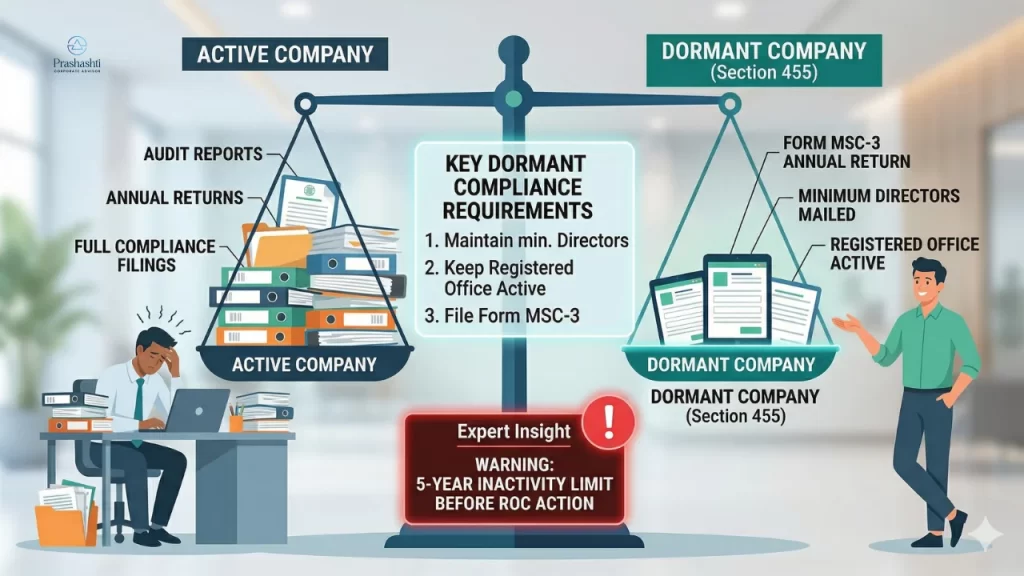
Dormant status comes with very few rules that need to be followed, but it does not mean the company can be left completely unattended.
A dormant company should:
- Maintain the minimum number of directors
- Keep its registered office active and updated
- File the annual return in Form MSC-3
Even though compliance is minimal, companies still need to follow basic filing requirements similar to those explained in the ROC filing checklist for private limited companies. If the financial activity starts, the company will no longer be qualified as dormant. Even small compliance delays can create trouble later, so it is better to keep these basics in order.
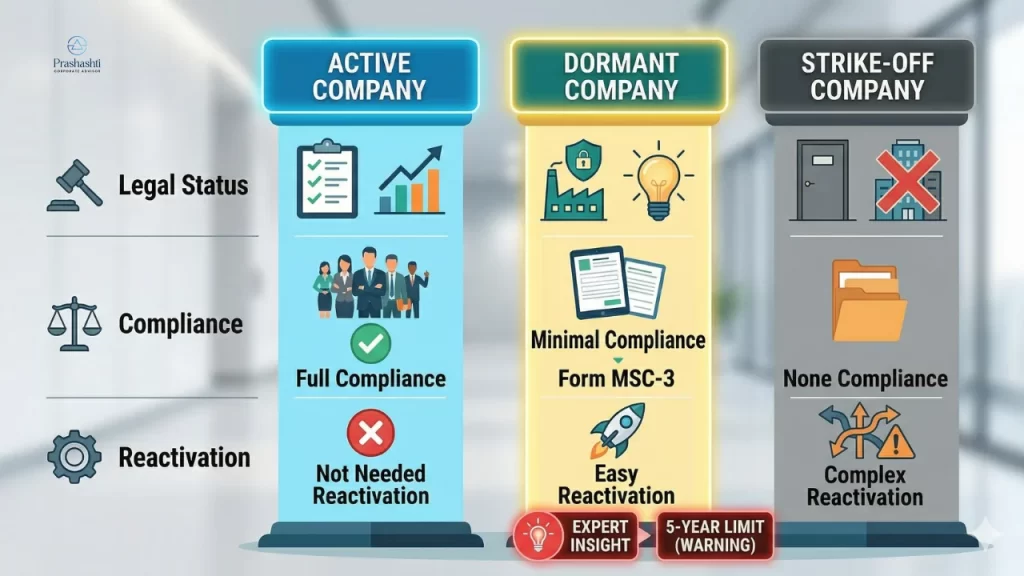
Difference Between a Dormant, a Strike-Off, and an Active Company?
Parameter | Dormant Company | Strike-Off Company | Active Company |
Legal Status | Exists | Removed | Fully active |
Compliance | Minimal | None | Full |
Reactivation | Easy | Complex | Not needed |
When Should You Opt for Dormant Status?
Dormant status makes sense when a company is not running actively but still matters for future use.
You can choose to have a dormant status when:
- A startup is waiting for funding
- Business plans are paused, not dropped
- assets are being held without daily operations
In some cases, founders who are still evaluating their business structure may also compare options like OPC vs Private Limited Company before making a final decision. If there is a clear plan to use the company later, dormant status helps keep things in place without the burden of full compliance.
Transactions Allowed in a Dormant Company Under Section 455
A dormant company is supposed to stay inactive, but there are a few basic transactions are still okay. They are:
- paying ROC fees for annual filings
- making mandatory statutory payments
- giving out shares as needed
- paying for things like rent or electricity
These activities are allowed according to MCA guidelines and won’t impact a company’s dormant status.
Expert Insight: Dormant status is often used by companies that are holding assets or by startups that haven’t started operations yet. It works well for a while, but it shouldn’t be left like that for too long. If the company stays inactive for more than five years, the ROC may step in and take action.
Final Thoughts on Dormant Status Under Section 455
Choosing a dormant company in India is just a way to give your company a break. The corporation stays where it is, but the pressure to follow all the rules is lower. It allows you time to reassess your goals without losing what you’ve previously done.
If you’re not sure about the process, companies like Prashasthi Corporate can help make it easier. In the end, it’s about following the rules today but leaving the door open for tomorrow.